
Losing most or all of your teeth can affect how you eat, speak, and feel about yourself. Traditional dentures have helped people for years, but they often slip around and feel uncomfortable.
Hybrid dental implants combine the stability of implants with the practicality of dentures, offering a more secure option.
For people with severe tooth loss, hybrid dental implants are generally worth the investment because they stay firmly in place, feel more natural than traditional dentures, and help prevent jawbone loss.
They use four to six implants per jaw to hold a full set of teeth, which means you won’t need an implant for every missing tooth. This makes them a good middle ground between traditional dentures and individual implants.
Still, the question remains: are hybrid dental implants worth it?
The right choice depends on your specific situation, including your bone health, budget, and lifestyle needs.
Understanding how hybrid dental implants work and what they offer can help you decide if they match what you’re looking for in a tooth replacement solution.
Key Takeaways
- Hybrid dental implants use four to six implants per jaw to support a full set of replacement teeth that stay securely in place
- They cost more upfront than traditional dentures, but prevent jawbone loss and don’t need daily removal
- Your dentist can evaluate your bone density and health to determine if you’re a good candidate for this treatment option
Understanding Hybrid Dental Implants for Severe Tooth Loss
Hybrid dental implants offer a stable, permanent solution for people dealing with extensive tooth loss by combining implant technology with a fixed prosthesis.
These systems offer better chewing ability and comfort than traditional removable dentures.
What Are Hybrid Dental Implants?
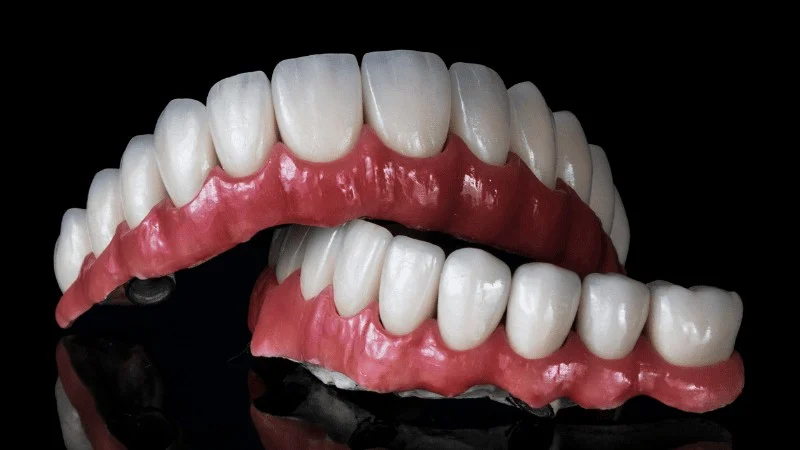
Hybrid dental implants are dental prosthetics that combine features of both implants and dentures.
Instead of resting on your gums like traditional dentures, they attach to four to six implant posts that are surgically placed into your jawbone.
The prosthesis stays fixed in place and doesn’t come out during eating or speaking. You won’t need denture adhesives or worry about slipping.
These dentures are called “hybrid” because they are both fixed and removable. Your dentist can remove them for maintenance, but you cannot remove them at home.
The implants are typically made from titanium, while the prosthetic teeth can be crafted from zirconia, acrylic, or composite materials.
This design lets you regain up to 90% of your natural chewing power.
How Hybrid Implants Address Severe Tooth Loss
When you’re dealing with severe tooth loss across an entire arch, hybrid dental implants provide a comfortable but reliable dental restoration.
They replace all your missing teeth in one procedure rather than requiring individual implants for each tooth.
The implants distribute bite forces evenly across your jawbone. This prevents the bone deterioration that happens with traditional dentures.
Unlike removable dentures, this bridge is fixed in place and supported by four to six implants. Your facial structure stays supported, which helps maintain a more youthful appearance.
The system works well even if you’ve already experienced significant bone loss, though some patients may need bone grafting first.
Candidacy Criteria for Hybrid Dental Implants
You need adequate bone density and healthy gum tissue for the implants to fuse successfully. You must have healthy bone and gum tissue in order for the implants to fuse successfully.
Your dentist will evaluate your jawbone structure using X-rays and CT scans. If you have insufficient bone, you might need grafting procedures before implant placement.
Key requirements include:
- Good overall health without uncontrolled diabetes or autoimmune conditions
- Non-smoker status or willingness to quit
- Commitment to proper oral hygiene
- Realistic expectations about results
Some habits and disease states can make the healing process more difficult. Your dentist will review your medical history and medications to determine if you’re a suitable candidate for the procedure.
Book your consultation in Ellenton, FL today to get a full evaluation of your bone health, discuss costs, and find out if hybrid dental implants are truly worth it for your smile.
How Hybrid Dental Implants Work
The hybrid implant process combines surgical placement of titanium posts with a custom prosthetic arch that replaces all your upper or lower teeth.
This system uses fewer implants than traditional methods and often allows you to leave with temporary teeth the same day as your surgery.
Components: Titanium Implants, Abutments, Prosthetic Teeth
Your hybrid implant system has three main parts that work together.
The foundation consists of titanium implants, which are small posts surgically placed into your jawbone. Most hybrid systems use 4-6 of these implants per arch.
The middle component includes abutments, which are connector pieces that attach to the top of each implant. These abutments stick out above your gum line and create anchor points for the final restoration.
The visible part is your prosthetic teeth, which form a complete arch of replacement teeth. This prosthetic attaches securely to the abutments and includes both the teeth and a small amount of gum-colored material.
The prosthetic is fixed in place, meaning you can’t remove it yourself like traditional dentures.
Each component is custom-made to fit your mouth and match your facial structure. The prosthetic teeth are typically made from durable materials like acrylic, composite resin, or zirconia.
Implant Surgery and Placement Process
Your implant surgery begins with a detailed examination and 3D imaging of your jaw. Your dentist uses these scans to plan exactly where each implant will go for the best support and stability.
During the procedure, you’ll receive local anesthesia or sedation to keep you comfortable. If you have remaining damaged teeth, your dentist will remove them first.
Then they create small openings in your jawbone at precise angles and depths.
The surgeon inserts each titanium implant into these prepared sites. Hybrid implants use strategically placed posts that often angle toward the back of your jaw to avoid areas with less bone.
This angled placement helps many patients avoid additional procedures.
The entire surgery for one arch typically takes 2-4 hours. Your dentist will attach temporary abutments and teeth before you leave.
Osseointegration and Bone Grafting
Osseointegration is the process by which your jawbone grows around and fuses with the titanium implants.
This biological bond takes about 3-6 months to complete and creates a strong, permanent foundation for your new teeth.
During this healing period, your bone cells attach directly to the implant surface. Titanium is biocompatible, meaning your body accepts it without rejection. You’ll need to eat soft foods and follow care instructions while osseointegration happens.
Some patients need bone grafting if they don’t have enough healthy jawbone to support implants. This procedure adds bone material to weak or thin areas of your jaw.
Hybrid implants can better address challenges posed by severe bone loss than traditional single-tooth implants because they distribute force across fewer, strategically placed posts.
Minor bone grafting can happen during your implant surgery. More extensive grafting requires a separate procedure 3-6 months before implant placement.
Teeth in a Day: Temporary Teeth and Immediate Restoration
The teeth in a day approach means you receive temporary teeth attached to your implants during the same appointment as your surgery. You won’t need to go without teeth while your implants heal.
Your dentist fabricates these temporary prosthetic teeth before your surgery based on models and scans of your mouth.
The temporary arch is lighter and simpler than your final restoration, but looks natural and allows you to eat soft foods right away.
These temporary teeth serve several purposes. They protect your implants during healing, maintain your facial appearance, and let you test the fit and function before your permanent teeth are made.
After osseointegration completes in 3-6 months, your dentist replaces the temporary prosthetic with your final, permanent teeth.
The final restoration is stronger, more detailed, and designed to last for many years with proper care.
Benefits and Drawbacks of Hybrid Dental Implants
Hybrid dental implants offer significant advantages in stability and function compared to removable options, though they come with higher upfront costs and surgical requirements.
Understanding both the strengths and limitations helps you make an informed choice about whether this treatment fits your needs.
Advantages Over Removable Dentures and Traditional Dentures
The most noticeable benefit of a hybrid denture is its stability. Unlike traditional dentures that sit on your gums and can slip during eating or talking, implant-supported dentures are anchored directly into your jawbone.
You won’t need messy adhesives or worry about embarrassing movement.
Your chewing ability improves dramatically with a fixed hybrid denture.
Many patients regain up to 90% of their natural bite strength, allowing them to enjoy foods that were previously off-limits like apples, nuts, and crusty bread. Traditional dentures typically restore only 20-30% of normal chewing power.
Implant-supported dentures also make oral hygiene easier than you might expect. You clean them much like natural teeth with brushing and flossing, without the need to remove them at night.
This approach feels more natural and helps maintain better gum health.
The aesthetic results provide a natural-looking smile that enhances your facial structure.
Because the prosthesis is custom-designed for your mouth, it supports your lips and cheeks properly, preventing the sunken appearance that often develops with removable dentures.
Long-Term Functionality and Oral Health Impact
Hybrid dental implants can last a lifetime with proper care, making them a durable investment. The implant posts themselves rarely need replacement, though the prosthesis may require adjustments after 10-15 years of use.
One crucial advantage is bone preservation. When you lose teeth, your jawbone naturally begins to shrink because it no longer receives stimulation from tooth roots.
The implant posts in hybrid systems act like artificial roots, stimulating the bone and preventing deterioration. This keeps your facial proportions stable over time.
Your speech typically improves with implant-supported dentures compared to traditional dentures.
Because they don’t cover your palate and stay firmly in place, you can pronounce words more clearly without the clicking sounds or slurring that removable dentures sometimes cause.
Hybrid dental implants minimize the need for extensive bone grafting, especially when compared to placing individual implants for each missing tooth.
The strategic placement of four to six implants can support an entire arch even if you’ve experienced some bone loss.
Potential Disadvantages and Limitations
The upfront cost represents the biggest barrier for many patients.
Hybrid dental implants typically range from $20,000 to $40,000 per arch, which is considerably more than traditional dentures that cost $1,000 to $3,000. Insurance coverage is often limited.
Surgery is required to place the implants, which involves some risks. You’ll need adequate healing time, and complications like infection or implant failure can occur in about 5% of cases.
Patients with certain health conditions like uncontrolled diabetes or heavy smoking habits may not be good candidates.
The treatment timeline takes several months from start to finish. You’ll need to wait for osseointegration, the process where your bone fuses with the implants, before receiving your final prosthesis.
This requires patience and commitment.
Maintenance visits are essential for long-term success. You’ll need regular dental checkups every 3-6 months to ensure your implants and prosthesis remain healthy and functional.
Visit our Ellenton, FL, dental office to see how hybrid dental implants work, explore before-and-after results, and get a personalized treatment plan.
Comparing Hybrid Dental Implants to Alternative Solutions
Traditional dentures slip and require adhesives, while dental bridges alter healthy teeth to support replacements.
Hybrid implants differ from these options by anchoring directly into your jawbone and replacing full arches without compromising existing teeth.
Hybrid Dental Implants vs. Traditional Dentures
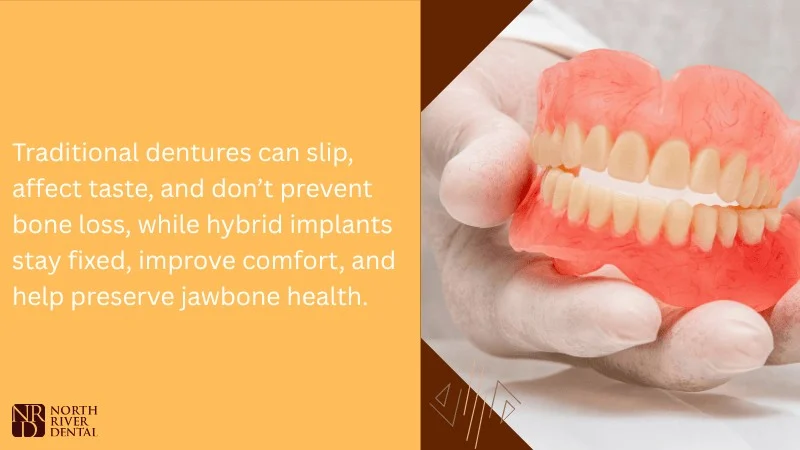
Traditional dentures rest on your gums and rely on suction or adhesives to stay in place. This means they can slip while you eat or talk, creating embarrassing moments and limiting which foods you feel comfortable eating.
Hybrid dental implants anchor directly to your jawbone, so they don’t move around. You can bite into apples or eat steak without worrying about your teeth shifting.
Full dentures also cover the roof of your mouth, which affects your ability to taste food. Hybrid implants leave your palate open for better flavor and comfort.
Key differences:
- Stability: Removable dentures slip; hybrid implants stay fixed
- Bone health: Traditional dentures don’t prevent jawbone loss; implant-supported dentures stimulate bone growth
- Comfort: Full dentures can cause sore spots; hybrid implants eliminate rubbing
Your jawbone needs stimulation to maintain its structure. When you wear traditional dentures, the bone continues to shrink over time, which changes how your dentures fit and requires frequent adjustments.
Hybrid Implants vs. Dental Bridges
Dental bridges work well for replacing one to three missing teeth in a row. Your dentist attaches artificial teeth to crowns placed on the natural teeth next to the gap.
The problem is that your healthy teeth must be filed down to support the bridge. This permanently changes their structure and makes them more vulnerable to decay or damage later.
Hybrid dental implants don’t require altering any existing healthy teeth because they’re self-supporting. The implants go into your jawbone instead of relying on neighboring teeth.
Bridges typically last 10 to 15 years before needing replacement. Hybrid implants are designed as a permanent solution that can last your lifetime with proper care.
When bridges fall short:
- Limited to small gaps (not full arch replacement)
- Require grinding down healthy teeth
- Need replacement every decade or so
- Don’t prevent bone loss under missing teeth
All-on-4 and Other Implant-Supported Systems
All-on-4 dental implants are actually a type of hybrid implant system. The term refers to the specific technique of using four strategically placed implants to support a full arch of replacement teeth.
Some cases require more than four implants for adequate support. Your dentist might recommend six or more implants depending on your bone density and the arch being restored.
All-on-4 implants provide a permanent, fixed option that feels like natural teeth. The prosthetic attaches directly to the implants and doesn’t come out.
Different materials are available for the prosthetic portion. You might choose between acrylic, porcelain, or zirconia based on your budget and preferences. Each material has different durability and aesthetic qualities.
The main advantage of these implant-supported systems over removable dentures is stability. You brush and care for them just like natural teeth, without taking them out at night.
Cost and Insurance Considerations
Hybrid dental implants represent a significant financial investment, typically ranging from $15,000 to $40,000 per arch.
Understanding the cost breakdown and insurance options helps you plan for this dental implant procedure effectively.

Breakdown of Hybrid Dental Implant Costs
The total cost of your hybrid dental implants covers multiple components of treatment. The implant surgery itself includes the titanium posts, surgical fees, and facility costs.
Your surgeon’s expertise and the complexity of your case affect this portion.
The prosthetic phase includes both temporary and permanent dentures. Material choice significantly impacts price.
Acrylic hybrid dentures offer a more economical option, lasting 5-10 years, while zirconia versions cost approximately twice as much but can last a lifetime.
Additional expenses include 3D CBCT scans (a few hundred dollars), bone grafting if needed ($500-$3,000 per site), and sedation options ($500-$1,500 per arch).
Geographic location also plays a role, with procedures in major cities costing 20-30% more than rural areas.
Dental Insurance Coverage and Financing Options
Most dental insurance plans have annual maximums between $1,000 and $2,000, covering only a small fraction of hybrid implant costs.
Your policy may cover individual components like extractions or the prosthetic portion, but rarely the full dental implant procedure.
Pre-authorization from your insurance company is essential before treatment. This step clarifies which portions receive coverage and prevents billing surprises.
Beyond traditional insurance, you have several financing options. Health Savings Accounts (HSAs) and Flexible Spending Accounts (FSAs) let you use pre-tax dollars for treatment.
Third-party medical financing companies offer payment plans, while some dental practices provide in-house membership plans with reduced fees.
Evaluating Long-Term Value
Hybrid dental implants cost more upfront than traditional dentures, but the long-term value often justifies the investment.
Traditional dentures require frequent adjustments, relines, and replacements every 5-7 years, adding ongoing costs.
Your hybrid implants prevent bone loss in your jaw, maintaining facial structure and eliminating the need for bone grafting later. They also function like natural teeth, allowing you to eat any foods without restrictions.
When comparing options, consider the total cost over 10-20 years rather than just the initial price.
The durability and stability of hybrid implants typically make them more cost-effective than multiple denture replacements over time.
Caring for Hybrid Dental Implants to Maximize Value
Proper care extends the life of your hybrid implants and protects your investment through consistent daily cleaning and professional checkups that catch problems early.
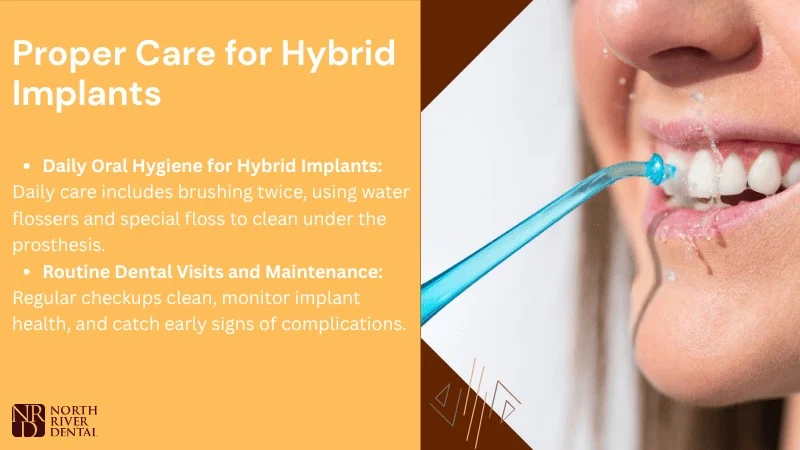
Daily Oral Hygiene for Hybrid Implants
You need to clean around your hybrid implants at least twice daily to prevent plaque buildup. Use a soft-bristled electric toothbrush to gently clean all surfaces of your prosthesis.
Water flossers and interproximal brushes help you reach under the prosthesis where food particles collect.
Thread floss or special implant floss should be passed beneath the restoration to clean the area where it contacts your gums.
The space between your gums and the prosthesis requires special attention. This area traps bacteria if not cleaned properly, which can lead to infection around the implants.
Your dentist may recommend specific products like implant brushes or floss threaders designed for hybrid prostheses. These tools make it easier to maintain the hard-to-reach areas that standard brushing misses.
Routine Dental Visits and Maintenance
Schedule professional cleanings every six months at minimum. Your dentist will check the implants, measure pocket depths, and look for bleeding around each implant site.
During maintenance appointments, your dentist may remove the prosthesis to clean calculus from areas you cannot reach at home.
The prosthesis gets cleaned in an ultrasonic bath, resurfaced if needed, and polished before being reinstalled.
Patients with poor plaque control need more frequent visits, sometimes every three to four months. Your dentist will adjust your schedule based on how well you maintain your implants between appointments.
These visits catch complications early, from loose screws to early signs of infection. Regular X-rays help monitor bone levels around each implant to ensure they remain stable over time.
Contact our Ellenton, FL dental team now to ask questions about pricing, healing time, and whether you may need bone grafting before implants.
Frequently Asked Questions
Hybrid dental implants raise many questions about alternatives, effectiveness, and what you can expect from the treatment process.
Understanding these common concerns helps you make an informed decision about whether this solution fits your needs.
What options do I have if I’ve lost most of my teeth?
You have several choices when you’ve lost most or all of your teeth. Traditional removable dentures are one option, though they tend to slip and don’t function as well as natural teeth.
Hybrid dental implants combine features of both implants and dentures to give you a more stable solution. These use titanium posts placed in your jawbone to anchor a full-arch prosthetic securely in place.
You could also consider individual dental implants for each missing tooth, but this becomes expensive and impractical when you’re missing many teeth.
Hybrid implants typically use four to six implants to support an entire arch of replacement teeth.
How does the success rate of hybrid dental implants compare to conventional dentures?
Hybrid dental implants offer better stability and function than conventional dentures. Traditional dentures often slip when you eat or speak, which can be uncomfortable and embarrassing.
Implant-supported hybrid bridges are fixed in place and don’t rely on surrounding teeth for support. This means you get consistent performance without the movement problems that plague regular dentures.
The titanium implants fuse with your jawbone through a process called osseointegration. This creates a sturdy foundation that can last many years with proper care.
Can you explain how hybrid dentures are maintained over time?
You need to brush and floss your hybrid dentures daily, just like you would with natural teeth. Good oral hygiene keeps the area around your implants clean and healthy.
Regular dental check-ups are essential for monitoring your implants and the surrounding tissues. Your dentist can spot potential problems early and keep your prosthetic functioning properly.
You should avoid extremely hard foods that could damage the prosthetic. While hybrid implants let you eat a much wider variety of foods than traditional dentures, you still need to be mindful of what you bite into.
Is there a significant difference in comfort between hybrid dental implants and regular dentures?
Yes, there’s a notable difference in comfort between the two options. Regular dentures can cause sore spots, slip around in your mouth, and make eating difficult.
Hybrid dental implants stay firmly in place because they’re anchored to your jawbone. You won’t experience the shifting or rubbing that often comes with removable dentures.
Hybrid implants feel more natural because they’re fixed in your mouth permanently. You can eat, speak, and smile with confidence without worrying about your teeth moving.
Could you describe the procedure for getting hybrid dental implants?
The process starts with a consultation where your dentist evaluates your oral health and takes imaging studies. This helps determine if you have enough jawbone to support the implants.
During the surgical phase, your dentist places titanium implants into your jawbone under local anesthesia or sedation. The number of implants depends on your specific needs, but typically ranges from four to six per arch.
You’ll need a healing period of several months for the implants to fuse with your bone. Once this integration is complete, your dentist attaches the custom-designed prosthetic to the implants.
What are the long-term benefits of choosing hybrid dental implants?
Hybrid implants help preserve your jawbone by stimulating it, preventing the bone loss that occurs with missing teeth. This maintains your facial structure and prevents the sunken appearance that can develop over time.
You’ll enjoy better chewing efficiency compared to traditional dentures. This means you can eat a wider variety of foods and get better nutrition.
The prosthetics are custom-designed to look natural and match your facial features.
With proper maintenance, your hybrid implants can last many years, making them a worthwhile investment in your oral health and quality of life.