
A bright smile can change how you feel about yourself every day. If you’re unhappy with stained or discolored teeth, you’ve probably looked into ways to improve your appearance.
Two popular options stand out: porcelain veneers and professional teeth whitening.
Teeth whitening removes surface stains to reveal your natural tooth color, while veneers cover your teeth completely to change both color and shape, making veneers the option that delivers a bigger overall smile transformation.
Whitening works well if you simply want brighter teeth. Veneers go further by fixing gaps, chips, and uneven shapes at the same time they brighten your smile.
Your choice depends on what bothers you most about your smile, your budget, and how long you want results to last. Both treatments can boost your confidence, but they work in different ways and fit different needs.
Understanding the key differences between veneers and teeth whitening helps you pick the right option for your goals.
Key Takeaways
- Veneers deliver more comprehensive smile transformations by fixing color, shape, and spacing issues simultaneously
- Whitening is less expensive and non-invasive but only addresses tooth discoloration
- Your best choice depends on your specific dental concerns, budget, and desired longevity of results
Schedule your cosmetic smile consultation in Ellenton, FL to compare veneers and teeth whitening.
Porcelain Veneers vs Teeth Whitening: Key Differences
Porcelain veneers and teeth whitening work in completely different ways to improve your smile. Veneers cover your teeth with custom shells while whitening removes stains using bleaching agents.
Smile Transformation Potential

Teeth whitening creates a noticeable but limited change to your smile. Your teeth can become 2-8 shades whiter, but they keep their original shape and size. The treatment only affects color, so any chips, gaps, or uneven edges will still be there after whitening.
Porcelain veneers offer a complete smile makeover that changes multiple aspects of your appearance at once. You can adjust tooth color, shape, length, and even slight alignment issues in a single treatment.
This makes veneers the better choice when you want a dramatic transformation.
Your dentist can help you design the smile you want with veneers. The results appear immediately after placement, while whitening requires time to reach your desired shade.
Issues Corrected by Each Option
Teeth whitening addresses specific staining problems but cannot fix physical tooth damage. It works best for:
- Coffee and tea stains
- Wine discoloration
- Tobacco stains
- Age-related yellowing
Whitening struggles with deep stains from medications or tooth trauma. It also won’t work on dental work like crowns or fillings.
Dental veneers solve multiple cosmetic problems:
- Severe stains that resist whitening
- Chipped or cracked teeth
- Gaps between teeth
- Worn-down edges
- Uneven tooth sizes
- Slightly crooked teeth
Veneers address both color and structural issues that teeth whitening cannot touch.
Longevity and Maintenance
The lifespan difference between these treatments is significant. Professional teeth whitening typically lasts 1-3 years before you need touch-ups. Your results fade faster if you drink coffee, tea, or wine regularly.
Porcelain veneers last 10-15 years with proper care. You won’t need touch-ups during this time, and the color stays consistent without fading.
| Treatment | Duration | Touch-ups Needed |
| Teeth Whitening | 1-3 years | Yes, regularly |
| Porcelain Veneers | 10-15 years | None |
Your daily care routine differs for each option. Whitened teeth need careful maintenance to avoid new stains. You should limit staining foods and use whitening toothpaste between treatments.
Veneers require simple brushing and flossing like natural teeth. Just avoid biting hard objects or using your teeth as tools.
Cost Comparison
The initial price difference between veneers and whitening is substantial. Professional teeth whitening costs $300-800 per treatment. At-home kits run $20-200 but deliver weaker results.
Porcelain veneers cost $800-2,500 per tooth upfront. This seems expensive compared to whitening, but you need to consider long-term value.
Whitening requires repeated treatments every 1-3 years to maintain your bright smile. Those costs add up over time. If you spend $500 on whitening every two years, that’s $2,500 over a decade.
Veneers provide permanent results for 10-15 years without additional costs. The price per year becomes reasonable when you calculate the total investment.
Veneers also deliver better value when you have severe discoloration or multiple cosmetic concerns that whitening cannot address.
Visit our Ellenton, FL, dental office to find out which cosmetic treatment is right for your smile.
How Treatment Processes Work
Each treatment follows a specific process that affects how long it takes and what you can expect during appointments. Veneers require multiple dental visits and permanent changes to your teeth, while whitening options range from quick office treatments to gradual at-home methods.
Porcelain Veneer Placement and Tooth Preparation
Your dentist starts the veneer process with a detailed consultation to discuss your goals and examine your teeth.
During the first appointment, they prepare your teeth by removing a thin layer of enamel from the front surface. This enamel removal typically ranges from 0.5 to 0.7 millimeters and creates space for the veneers to fit naturally.
After tooth preparation, your dentist takes impressions or digital scans of your teeth. These precise measurements go to a dental lab where technicians craft your custom porcelain veneers.
You’ll wear temporary veneers for about two weeks while the lab creates your permanent ones.
At the final veneer placement appointment, your dentist removes the temporaries and checks the fit and color of your new veneers. They clean and etch your teeth to help the veneers bond properly.
Using special dental cement, they attach each veneer and use a curing light to harden the bond. The entire process from start to finish usually takes two to three weeks.
Professional Teeth Whitening and Bleaching Agents
Professional whitening treatment in your dentist’s office uses powerful bleaching agents to deliver fast results. Most dentists apply a gel containing 25% to 40% hydrogen peroxide directly to your teeth.
Some offices use carbamide peroxide instead, which breaks down into hydrogen peroxide when applied.
Your dentist protects your gums and soft tissues before applying the whitening gel. They may use a special light or laser to activate the bleaching agents and speed up the process.
In-office whitening typically takes 60 to 90 minutes and can lighten your teeth by several shades in one visit.
The bleaching agents work by penetrating your tooth enamel and breaking apart stain molecules. You might feel some temporary sensitivity during or after treatment, but this usually goes away within a day or two.
At-Home Whitening Methods
At-home whitening gives you more control over the pace of treatment. Your dentist can provide custom whitening trays that fit your teeth perfectly.
You fill these trays with a lower concentration gel (usually 10% to 20% carbamide peroxide) and wear them for 30 minutes to several hours daily.
Over-the-counter options include whitening strips, which you apply directly to your teeth for 30 minutes once or twice a day. These products contain lower concentrations of hydrogen peroxide than professional treatments.
Whitening toothpaste offers the mildest approach, using gentle abrasives and low levels of peroxide to gradually remove surface stains over several weeks.
Results from at-home whitening typically appear after one to two weeks of consistent use. Custom trays from your dentist deliver better results than store-bought options because they keep the gel in contact with all tooth surfaces evenly.
Book a consultation today to decide whether veneers or teeth whitening fits your smile goals.
What Each Option Treats Best
Teeth whitening works best for stains on your tooth surface, while veneers can fix both color problems and physical flaws like chips or gaps. The right choice depends on whether you need a simple brightening or a complete smile makeover.
Addressing Stains and Discoloration
Extrinsic stains sit on your tooth surface and respond well to whitening treatments. These surface stains come from coffee, tea, red wine, and tobacco. Professional whitening removes them using bleaching agents that break down stain molecules.
Intrinsic stains go deeper into your tooth structure. They happen from medications like tetracycline, fluorosis, or tooth trauma. Teeth whitening often fails to remove these deep stains that regular bleaching can’t reach.
Veneers cover all types of stained teeth permanently. They work when you have tooth discoloration that won’t lighten with bleaching. The ceramic shells hide gray, brown, or yellow teeth that don’t respond to other treatments.
Whitening creates results that fade over time. Veneers maintain their color for 10-15 years without staining.
Improving Tooth Shape and Alignment
Teeth whitening only changes color. It can’t fix the shape or position of your teeth.
Veneers reshape misshapen teeth to create a more uniform smile. They make pointy teeth look rounded or fix teeth that appear too small. Each veneer is custom-made to match the size and shape you want.
Veneers can address slightly crooked teeth without braces. They create the appearance of straight teeth by covering minor alignment issues. This works for small rotations or teeth that tilt inward or outward.
Your dentist can also lengthen short teeth or create a more even smile line. Veneers fix worn-down edges from grinding or aging.
Solving Chips, Gaps, and Uneven Teeth
Whitening treatments don’t repair physical damage to your teeth. You need veneers to fix structural problems that affect your smile.
Veneers can repair:
- Small chips or cracks in your front teeth
- Gaps between teeth
- Teeth that look too short or too long
- Uneven teeth that create an irregular smile line
- Worn enamel from acid erosion or grinding
The thin shells cover your entire front tooth surface to hide these flaws. They close small spaces without orthodontic treatment. Each veneer bonds permanently to your tooth, creating a smooth, natural-looking surface.
Gaps between teeth can make you feel self-conscious and trap food particles. Veneers eliminate these spaces instantly.
They create a complete transformation when you have multiple cosmetic concerns that whitening alone can’t address.
Suitability and Candidacy
Not everyone is a good fit for every cosmetic dental treatment. Your oral health, specific concerns, and smile goals determine which option works best for you.
Ideal Candidates for Porcelain Veneers

You’re a good candidate for veneers if you have multiple cosmetic concerns beyond just discoloration. Porcelain veneers can correct chips, gaps, and minor misalignment in addition to staining.
Your teeth and gums need to be healthy before getting veneers. A cosmetic dentist will check for gum disease, tooth decay, or other oral health issues during your cosmetic consultation.
You’ll need treatment for these problems first.
Veneers work well if you grind your teeth but wear a night guard to protect them. You should have enough tooth enamel for the bonding process. People with severely worn enamel might need alternative treatments.
Good veneer candidates typically have:
- Multiple cosmetic flaws they want to fix at once
- Healthy gums and teeth structure
- Realistic expectations about the results
- Commitment to good oral hygiene habits
Best Candidates for Teeth Whitening
Whitening treatments work best if your main concern is surface stains or yellowing. You’re an ideal candidate when you’re already happy with the shape, size, and alignment of your teeth.
Your oral health needs to be good before whitening. Active cavities or gum disease can cause problems during the bleaching process. Your cosmetic dentist will examine your mouth first to make sure whitening is safe.
Professional teeth whitening is great for healthy teeth with external stains from coffee, tea, wine, or tobacco. People with naturally yellow teeth often see better results than those with gray or brown discoloration.
You should have realistic expectations about how white your teeth can become. Natural teeth have limits to how bright they’ll get.
When to Avoid These Treatments
Some situations make these treatments less suitable or require you to wait. Pregnant or nursing women should postpone whitening treatments until later.
You’re not a good candidate for veneers if you have severe tooth grinding without using a protective guard.
The pressure can damage or crack the porcelain. People with significant tooth decay or advanced gum disease need to address these oral health problems first.
Whitening won’t work on certain types of stains. Gray discoloration from medications like tetracycline doesn’t respond well to bleaching. Stains inside the tooth structure are harder to remove than surface stains.
Avoid these treatments if you have:
- Active gum disease or untreated cavities
- Extremely sensitive teeth (for whitening)
- Insufficient enamel (for veneers)
- Unrealistic expectations about results
Your cosmetic dentist will evaluate your specific situation during a consultation. They’ll recommend the treatment that matches your oral health status and cosmetic goals.
Benefits and Drawbacks of Each Treatment
Both cosmetic dental treatments offer unique advantages for improving your smile. Veneers provide long-lasting results that address multiple concerns, while whitening offers a quick and affordable way to brighten your teeth.
Advantages of Porcelain Veneers
Porcelain veneers give you a complete smile makeover that goes beyond just color. These thin shells can fix chipped or cracked teeth, close gaps, and even straighten your smile without braces.
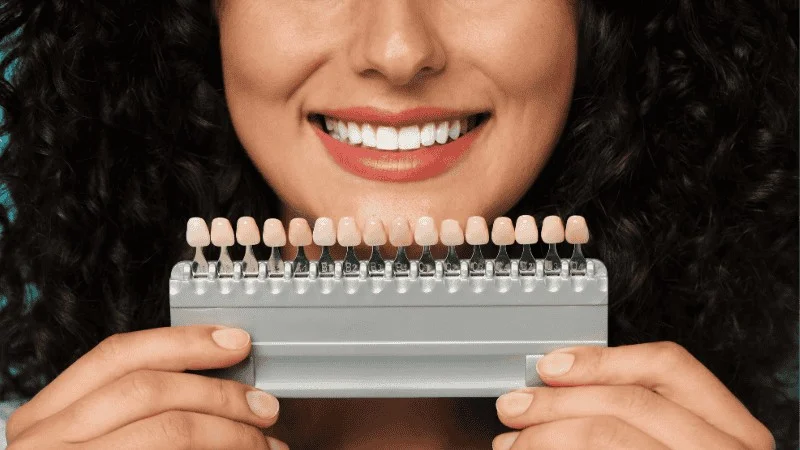
Veneers are custom-made to match your desired shade of white, giving you complete control over your final look.
The durability of veneers makes them a smart long-term investment in cosmetic dentistry. When you care for them properly, they can last up to 20 years. Porcelain is naturally stain-resistant, so your bright smile stays white even when you drink coffee or red wine.
Veneers work well for teeth that won’t respond to traditional whitening methods. If your teeth have gray or brown discoloration, veneers can cover these stubborn stains completely.
Pros and Cons of Teeth Whitening
Professional teeth whitening delivers fast results in about an hour. It’s less invasive than other cosmetic dental treatments and typically costs less than veneers. Your natural tooth structure stays intact during the process.
The treatment works best on yellow stains but struggles with gray or brown discoloration. Whitening only changes the color of your natural teeth, so it won’t work on crowns or fillings.
You’ll need regular touch-ups to maintain your bright smile since the effects fade over time.
Potential Side Effects and Sensitivity
Whitening treatments can cause tooth sensitivity and gum irritation from the bleaching agents. Your dentist takes precautions to protect your gums, but some discomfort is common.
The sensitivity usually goes away within a few days after treatment. Veneers require removing a small amount of tooth enamel, which is permanent but generally doesn’t cause ongoing sensitivity issues.
Making the Right Choice for Your Smile
Your dental needs and personal goals should guide your decision between veneers and whitening treatments. A cosmetic dentist can help you understand which option will give you the smile transformation you’re looking for.
Comparing Results and Goals
Teeth whitening works best if you’re happy with your tooth shape and alignment but want a brighter color. This treatment removes stains and lightens your natural teeth by several shades. It’s a good fit when your main concern is yellowing or discoloration.
Veneers offer more than just whitening. They can fix chips, gaps, crooked teeth, and uneven shapes all at once. If you want to change multiple things about your smile, veneers might deliver better results for your smile makeover. They create a complete transformation in one treatment.
Your budget also matters. Whitening costs less upfront and you can repeat it over time. Veneers cost more initially but last 10-15 years without needing touch-ups.
Combining Treatments for Ultimate Results
You don’t have to choose just one option. Many people get both veneers and teeth whitening for the best outcome.
Your cosmetic dentist might whiten your natural teeth first, then match veneers to that brighter shade. This approach works well if you only need veneers on your front teeth.
The whitening keeps your other teeth looking uniform with the veneers.
Some people start with whitening to see if it gives them the smile transformation they want. If the results aren’t enough, they can add veneers later to specific teeth that need more correction.
This step-by-step method lets you control costs while working toward your ideal smile.
Frequently Asked Questions
People often have similar questions when deciding between these two smile improvement options. Cost differences, longevity, and maintenance needs are among the most common concerns.
How long do porcelain veneers last compared to the results from teeth whitening?
Porcelain veneers typically last between 10 to 15 years with proper care. This makes them a long-term investment in your smile.
Professional teeth whitening results usually last between 6 months and 2 years, depending on your habits and diet. If you drink coffee, tea, or red wine regularly, your results may fade faster.
You’ll need touch-up treatments to maintain your whitened smile over time. Veneers don’t change color and continue looking the same throughout their lifespan.
What’s the difference in cost between getting porcelain veneers and professional teeth whitening?
Teeth whitening is much more affordable upfront than veneers. Professional whitening treatments typically cost a few hundred dollars per session.
Porcelain veneers cost significantly more because they’re custom-made and require more dental work. You can expect to pay several hundred to over a thousand dollars per tooth.
While veneers require a larger initial investment, they last much longer than whitening results.
Are there any risks or side effects associated with porcelain veneers or teeth whitening?
Teeth whitening can cause temporary tooth sensitivity in some people. Your gums might also feel irritated for a short time after treatment. These side effects usually go away within a few days.
Veneers require removing a thin layer of your tooth enamel to ensure a proper fit. This is a permanent change to your teeth. Once you get veneers, you’ll always need them because the enamel doesn’t grow back.
Some people experience sensitivity after getting veneers, but this often improves over time.
Could you explain the maintenance requirements for porcelain veneers versus teeth whitening?
Maintaining whitened teeth requires avoiding foods and drinks that stain. You’ll need to be careful with coffee, tea, red wine, and dark berries.
Regular touch-up treatments help keep your smile bright. Veneers need less specific maintenance but still require good oral hygiene.
You should brush twice daily, floss regularly, and visit your dentist for checkups. Avoid biting hard objects or using your teeth as tools, as this can damage veneers. Both options benefit from regular professional cleanings.
How does the process of getting porcelain veneers differ from undergoing teeth whitening?
Professional teeth whitening is a straightforward process that usually takes one or two visits. Your dentist applies a whitening agent to your teeth and may use a special light to activate it.
Getting veneers involves multiple appointments and more preparation. First, your dentist removes a small amount of enamel from your teeth and takes impressions.
A dental lab creates your custom veneers based on these impressions. At your next visit, your dentist bonds the veneers to your teeth. The entire process typically takes a few weeks from start to finish.
In what situations are porcelain veneers preferred over teeth whitening for cosmetic dentistry?
Veneers work better when you have deep stains that don’t respond to bleaching. Certain medications or trauma can cause discoloration that whitening can’t fix.
You might choose veneers if you want to address multiple issues at once. They can fix chips, cracks, gaps between teeth, uneven teeth, and minor misalignment in addition to changing color.
Veneers give you more control over the final appearance of your smile. If you want to change both the color and shape of your teeth, veneers offer a complete transformation that whitening alone cannot provide.