

Getting your teeth professionally whitened feels amazing, but watching that bright smile fade over time can be frustrating. The good news is that with the right care and habits, you can keep your teeth looking white and bright for much longer.
Most whitening results last between six months and three years, but how long yours last depends entirely on how well you take care of your teeth after treatment.
So, how to maintain teeth whitening results? The answer comes down to simple daily choices. What you eat and drink, how you clean your teeth, and whether you avoid certain staining habits all play a big role.
Some people think whitening is a one-time fix, but your teeth are constantly exposed to things that can cause new stains.
You can protect your investment and enjoy a radiant smile for years by following some straightforward tips. From adjusting your morning coffee routine to scheduling regular dental visits, small changes add up to big results.
The strategies in this guide will help you understand exactly what works to keep your teeth white longer.
Key Takeaways
- Brushing twice daily, flossing, and using mouthwash are essential for keeping your teeth white after treatment
- Limiting coffee, tea, red wine, and dark-colored foods helps prevent new stains from forming on your teeth
- Regular dental cleanings and occasional touch-up treatments extend how long teeth whitening lasts
Understanding Teeth Whitening and Its Longevity
Teeth whitening results don’t last forever, but knowing what to expect can help you plan for touch-ups and maintain your bright smile. The lifespan of your whitening treatment depends on the method you choose and how you care for your teeth afterward.
How Long Do Teeth Whitening Results Typically Last
Professional teeth whitening treatments last about one year on average without any touch-ups. Some people enjoy results that extend even longer than that.
At-home whitening kits typically offer results that last around 4 to 6 months. You’ll need touch-ups more frequently with these products.
Your teeth naturally absorb new stains over time. This means whitening isn’t permanent like veneers or crowns.
The good news is you can extend your results significantly with proper care. Regular touch-ups help maintain the level of brightness you want. Many people touch up right after their dental cleanings every six months to keep their smile consistently white.
Factors Influencing Whitening Longevity
Your daily habits play a huge role in how long your teeth whitening results last. Smoking or using tobacco products will quickly discolor your teeth again.
Dark beverages cause the most staining. Coffee and tea drinkers may need to touch up every 3-4 months instead of waiting a full year. Red wine, cola, and other dark liquids also shorten your results.
Certain foods leave stains on your enamel too:
- Berries (blueberries, blackberries)
- Tomato-based sauces
- Soy sauce
- Balsamic vinegar
The strength of your whitening gel matters as well. Products with higher concentrations of hydrogen peroxide or carbamide peroxide deliver longer-lasting results.
Your oral hygiene routine also affects longevity—regular brushing and flossing help prevent new stains from setting in.
Difference Between Professional and Over-the-Counter Whitening
Professional whitening from your dentist provides significantly stronger and longer-lasting results than store-bought products. Custom whitening trays filled with professional-grade gel penetrate your teeth more effectively than whitening strips.
Over-the-counter whitening products contain lower concentrations of active ingredients. This makes them safer for unsupervised use but less powerful. You’ll see more modest results that fade faster.
Professional treatments also give you custom-fitted trays you can reuse for touch-ups. You simply purchase refill gel from your dentist when needed. Strip systems require you to buy completely new kits each time.
The cost difference is notable upfront, but professional whitening often proves more economical long-term. You get better initial results and easier maintenance.
Essential Steps Immediately After Whitening
Your teeth need special care right after whitening because the enamel becomes more porous and vulnerable to stains. The choices you make in the first two days will directly impact how long your bright smile lasts.
The First 48 Hours: What to Avoid
The first 48 hours after whitening are the most critical time for protecting your results. Your tooth enamel remains porous during this period, making it highly susceptible to absorbing stains from foods, drinks, and other substances.
You should avoid all dark-colored beverages including coffee, tea, red wine, and cola. These drinks can quickly reverse your whitening results because your teeth act like a sponge right after treatment.
Stay away from tobacco products completely. Smoking or vaping can instantly stain your newly whitened teeth since nicotine and tar penetrate the porous enamel easily.
Skip colored mouthwashes too. Many contain artificial dyes that can cause discoloration during this vulnerable window. Use a clear, alcohol-free rinse instead if you need to freshen your breath.
The White Diet for Post-Whitening Care

Following a white diet after teeth whitening means eating light-colored foods that won’t stain your teeth. Stick to plain pasta with white sauce, grilled chicken, white fish, rice, and bananas for the first two days.
You can also enjoy dairy products like milk, plain yogurt, white cheese, and cottage cheese. Oatmeal, cream of wheat, and white bread are safe choices too.
Peeled apples and bananas work well for snacks. Baked potatoes without dark toppings are another good option.
Avoid staining foods like berries, beets, tomato sauce, soy sauce, balsamic vinegar, and dark chocolate. These contain pigments that easily attach to your porous enamel and create surface stains.
Managing Sensitivity and Enamel Protection
Tooth sensitivity is common after whitening treatments. Your enamel becomes temporarily more sensitive to hot and cold temperatures, so stick to lukewarm or room-temperature foods and drinks.
Use a desensitizing toothpaste if you experience discomfort. These products contain ingredients that help soothe nerve endings in your teeth.
Brush gently with a soft-bristle toothbrush. Aggressive brushing can irritate your enamel when it’s in a more porous state and worsen sensitivity.
Drink plenty of water throughout the day. Water helps rinse away food particles and acids that could damage your enamel or cause staining. It also keeps your mouth hydrated, which supports overall oral health.
Daily Habits to Maintain Whitening Results
Your everyday routine plays a major role in how long your teeth stay white. Simple choices about brushing, product selection, and hydration can add months to your whitening results.
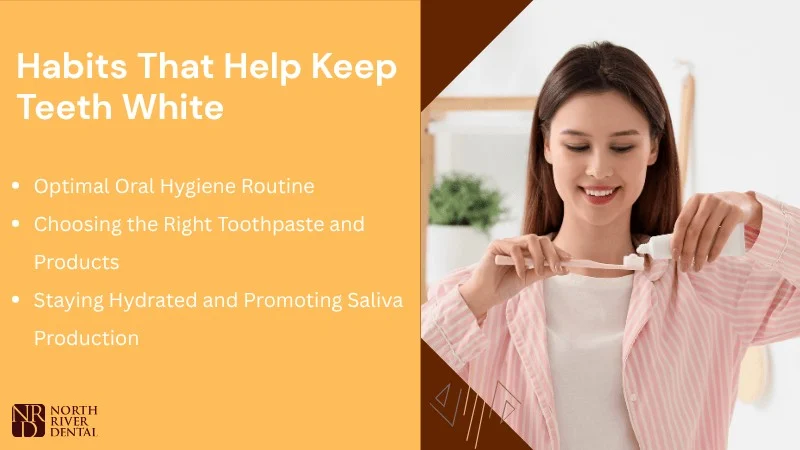
Optimal Oral Hygiene Routine
Brushing twice a day forms the foundation of whitening maintenance. Use a soft-bristled toothbrush to gently remove surface stains without damaging your enamel.
Focus on proper technique by holding your brush at a 45-degree angle to your gums. Spend at least two minutes covering all tooth surfaces. Don’t forget to brush your tongue, which can harbor bacteria that affect your smile’s brightness.
Flossing daily is just as important as brushing. It removes plaque and food particles between teeth where stains love to hide. These areas contribute to overall discoloration if neglected.
Add an alcohol-free mouthwash to your oral care routine. It reaches spots your brush and floss might miss. Mouthwash helps reduce bacteria and stains while freshening your breath.
Choosing the Right Toothpaste and Products
Fluoride toothpaste strengthens your enamel and protects against decay. Strong enamel resists staining better than weakened teeth.
You can use whitening toothpaste occasionally to maintain brightness. However, don’t rely on it daily since overuse may cause sensitivity. Rotate between fluoride and whitening formulas for best results.
Look for products with the American Dental Association seal of approval. These meet safety and effectiveness standards. Avoid products with harsh abrasives that can scratch enamel and make staining worse.
Consider dentist-prescribed whitening trays for touch-up treatments every few months. These provide controlled, even application without the risks of overuse.
Staying Hydrated and Promoting Saliva Production
Water is your smile’s best friend for whitening maintenance. It rinses away food particles and staining agents before they settle on your teeth.
Drink water throughout the day, especially after meals or beverages like coffee and tea. This simple habit dilutes acids and washes away pigments that cause discoloration.
Saliva production naturally protects your teeth from stains. Chewing sugar-free gum stimulates saliva flow, which cleanses teeth and neutralizes harmful acids. Look for gum containing xylitol for added cavity protection.
Staying well-hydrated supports healthy saliva production. Your mouth produces less saliva when you’re dehydrated, leaving teeth vulnerable to staining.
Aim for eight glasses of water daily to maintain oral health and protect your whitening investment.
Diet and Lifestyle Modifications for a Brighter Smile
What you eat and drink plays a major role in how long your teeth stay white. Certain foods and beverages can undo your whitening efforts, while others naturally help remove surface stains and keep your smile bright.
Avoiding Stain-Causing Foods and Beverages
Dark-colored foods and drinks are the biggest threat to your white smile. Coffee and tea top the list because they contain tannins that stick to tooth enamel and create yellowish or brown surface stains.
Red wine, cola, and dark sodas also cause significant discoloration. Berries like blueberries and blackberries contain pigments that can stain teeth over time. Soy sauce, balsamic vinegar, and tomato-based sauces are other common culprits.
You don’t have to give up stain-causing foods completely. Just be mindful of how often you consume them. Try to limit these items in the 48 hours after whitening when your enamel is most vulnerable to staining.
Smoking and vaping accelerate tooth discoloration faster than almost anything else. Nicotine and tar create stubborn stains that are difficult to remove even with professional treatments.
Tips for Consuming Staining Drinks
If you can’t skip your morning coffee or afternoon iced tea, use a straw to minimize contact with your front teeth. Position the straw toward the back of your mouth so the liquid bypasses your most visible teeth.
Rinse your mouth with water immediately after drinking coffee, tea, or other dark beverages. This simple habit washes away pigments before they settle into your enamel. Don’t brush right away though, as acidic drinks can temporarily soften enamel.
Drinking your coffee or tea quickly rather than sipping it throughout the day reduces the time staining agents spend on your teeth. You can also add milk to coffee and tea, which may help reduce their staining power.
Beneficial Foods for Whiter Teeth

Crunchy fruits and vegetables act like natural toothbrushes. Apples, carrots, and celery create friction that helps remove surface stains and scrub away plaque buildup.
Strawberries contain malic acid, which may help break down stains naturally. Pineapple has an enzyme called bromelain that can help remove discoloration. Cheese and other dairy products contain calcium and proteins that strengthen enamel.
Foods that help keep teeth white:
- Apples
- Carrots
- Celery
- Cauliflower
- Strawberries
- Cheese
- Nuts
Drinking plenty of water throughout the day washes away food particles and keeps your mouth clean between brushing sessions.
Addressing Harmful Habits: Tobacco, Smoking, and More
Tobacco and smoking create stubborn stains that make your teeth whitening efforts much harder to maintain. These habits also damage your tooth enamel and put your oral health at serious risk.
Impact of Tobacco on Whitening Results
Tobacco products are among the worst offenders when it comes to tooth discoloration. Cigarettes contain tar and nicotine that create yellow and brown stains on your teeth.
These stains sink deep into your enamel, making them extremely difficult to remove even with professional whitening treatments.
Tobacco use puts you at higher risk for oral cancers, gum disease, and tooth loss. When you continue smoking after whitening your teeth, the stains return faster than they would otherwise.
Your whitening results can fade in just weeks if you keep using tobacco. The chemicals stick to your teeth every time you smoke or use smokeless tobacco products.
This means you’ll need more frequent touch-ups and spend more money to maintain your bright smile.
Benefits of Quitting Smoking
Over 16 million Americans live with a smoking-related disease, and your teeth are just one part of your body affected by tobacco use. When you quit smoking, your teeth whitening results last significantly longer because new stains stop forming.
Your gums become healthier within weeks of quitting. Better gum health means your teeth stay stronger and more stable. You’ll also notice that food tastes better and your breath improves.
Quitting smoking lowers your risk for early death and developing serious diseases. Your oral health improves dramatically, and you save money that would have gone toward cigarettes and extra dental treatments.
Preventing Enamel Damage
Tooth enamel is the hard outer layer that protects your teeth. Tobacco weakens this protective coating and makes your teeth more vulnerable to stains and decay.
When you avoid tobacco, you protect your enamel from constant chemical exposure. Strong enamel holds onto whitening results better and resists new stains more effectively.
You can strengthen your enamel by brushing with fluoride toothpaste twice daily and eating calcium-rich foods. Drinking water throughout the day helps rinse away harmful substances before they damage your teeth.
Regular dental checkups catch enamel problems early so you can address them before they get worse.
Professional Maintenance and At-Home Touch-Ups
Getting your teeth whitened is just the first step. Regular dental cleanings remove deep stains that daily brushing misses, while periodic touch-up treatments refresh your brightness and prevent fading over time.
Importance of Regular Dental Cleanings
Professional dental cleanings are essential for keeping your whitened teeth looking their best. Even with careful brushing and flossing, plaque and tartar build up on your teeth over time. These deposits make your teeth look dull and yellow.
A professional cleaning removes these stubborn stains that you can’t eliminate at home. Your dentist or hygienist uses special tools to clean below the gum line and polish your teeth.
This keeps your enamel smooth, which helps reflect light for a brighter appearance.
You should schedule professional dental cleanings every six months to maintain your whitening results. These appointments also let your dentist check for any issues that might affect your smile.
Regular professional cleanings prevent new stains from setting in and help your whitening last much longer.
Scheduling Touch-Up Whitening Treatments
Your teeth naturally fade over time, even with the best care. Touch-up whitening treatments help you maintain that bright smile without starting from scratch.
Most people need touch-ups every 6 to 12 months, depending on their diet and lifestyle. If you drink a lot of coffee or red wine, you might need touch-ups more often. People who avoid staining foods can go longer between treatments.
Signs you need a touch-up:
- Your teeth look slightly yellower than right after whitening
- You notice new stains appearing
- Your smile doesn’t look as bright in photos
- It’s been over a year since your last treatment
Talk to your dentist about creating a touch-up schedule that works for your needs. They can recommend the right timing based on how your teeth respond.
Choosing Between Professional and At-Home Touch-Ups
You have two main options for touch-up whitening: professional treatments at your dentist’s office or at-home products. Each has its own benefits.
Professional touch-ups deliver the strongest results in the shortest time. Your dentist uses higher-concentration whitening agents that work faster than store products. Professional whitening results can last up to a year or longer with proper care.
At-home whitening options are more convenient and affordable for maintenance. Whitening strips are popular for quick touch-ups between professional treatments. At-home professional teeth whitening results typically last about a year without touch-ups.
Your dentist can provide custom whitening trays for at-home use. These give you better results than over-the-counter whitening products because they’re made specifically for your teeth.
For minor maintenance, whitening strips work well every few months. For more noticeable fading, schedule a professional treatment to restore your brightness quickly.
Frequently Asked Questions
Many people have similar questions about protecting their whitening results.
Understanding which foods cause the most staining, when you can eat after treatment, and how to balance good habits with your favorite beverages can help you keep your smile bright.
What foods and drinks should I avoid after whitening to prevent new stains?
Dark berries, tomato-based sauces, beets, and soy sauce can all contribute to staining over time. Curries with red and yellow spices may also darken your teeth.
Chocolate is another food that contains pigments. You don’t need to give up these foods completely, but eating them less often helps.
Rinsing your mouth with water after eating deeply pigmented foods reduces the time pigments stay on your teeth. Brushing after meals also helps prevent stains from building up.
How long should I wait before eating or drinking after a whitening treatment?
Your dentist will give you specific instructions based on your treatment type. Some dentists recommend avoiding highly pigmented foods and drinks for a short time immediately after whitening.
Enamel may be temporarily more porous right after treatment. This means it could absorb stains more easily during the first few hours.
Most people can eat normally within 24 hours. Ask your dentist about the best timeline for your specific whitening method.
What daily brushing and flossing habits help keep teeth looking whiter for longer?
Brushing twice daily with fluoride toothpaste removes plaque and surface pigments before they build up. Flossing once a day clears particles from between your teeth where stains can hide.
Plaque buildup traps stain-causing particles against your enamel. Regular brushing and flossing prevent this from happening.
A consistent routine matters more than expensive products. Sticking to your daily habits protects both your tooth color and overall health.
How often should I use whitening toothpaste or touch-up treatments without overdoing it?
Whitening toothpaste can help manage minor surface stains, but you should avoid products that are too abrasive. Overuse can wear down your enamel over time.
Touch-up whitening treatments are typically safe every 6 to 12 months, depending on how quickly your teeth discolor. Whitening too often can cause tooth sensitivity and gum irritation.
Talk to your dentist before starting frequent touch-ups. Your enamel health determines the right timing for your situation.
Does coffee, tea, or red wine stain more after whitening, and how can I still enjoy them?
Coffee, tea, and red wine are among the most common causes of tooth discoloration. Dark sodas and fruit juices can also stain your teeth.
You can still drink these beverages after whitening. Drinking water afterward helps rinse away pigments before they settle on your enamel.
Using a straw for iced drinks reduces direct contact with your teeth. Maintaining regular brushing after consuming staining beverages also protects your results.
What is the 3-3-3 rule for teeth, and how can it support longer-lasting whiteness?
The 3-3-3 rule means brushing for 3 minutes, 3 times per day, and waiting 3 minutes after eating acidic foods before brushing. Some versions suggest brushing twice daily for 2 minutes instead of three times.
Waiting before you brush after acidic foods protects your enamel. Acids temporarily soften enamel, and brushing right away can cause damage.
This rule helps you maintain good oral hygiene without harming your teeth. Following it supports both your whitening results and your overall dental health.